
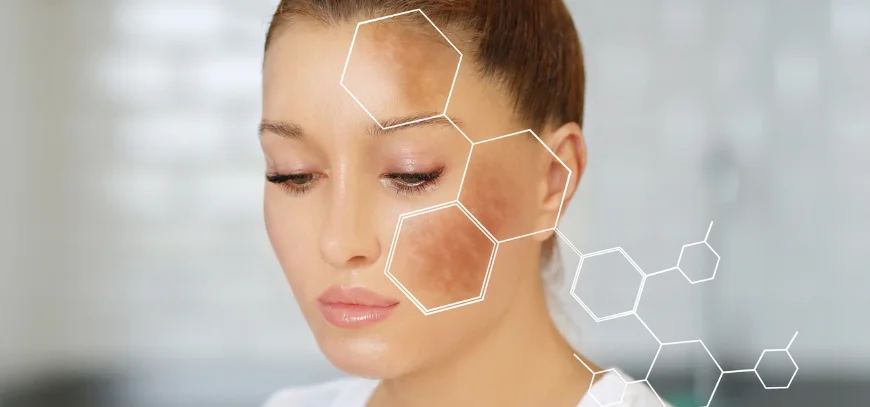
Overview
Freckles, or ephelides, are small flat tan marks that often darken after sun on the nose, cheeks, and shoulders. Solar lentigines, or sun spots, tend to stay visible through the year on chronically exposed skin such as the face and hands. Freckle removal at AB Skin Clinic begins by separating these patterns from melasma. Dr. S. Madhuri examines the marks and your sun habits before any procedure is discussed. The visit is an assessment of your skin, not a promise that every brown spot will disappear.
Concerns this visit may address
People book when summer darkens speckles across the cheeks, when a few larger spots on the forehead or hands show in photographs, or when a cosmetic cream has left the same marks. A new brown mark that does not match long-standing freckles needs a medical look. Freckles, a stable lentigo, and a lesion that should be examined more closely are different findings. Pigment that returned after a peel or laser is a reason to reconsider sun protection and the plan.
Who may benefit from an evaluation
An evaluation helps adults who want the pattern named before treatment. People who freckle easily, work outdoors, or cannot tell freckling from lentigines or melasma often leave with a clearer plan. You may still benefit if you choose sun protection and a topical, without a procedure. Mention pregnancy, recent isotretinoin, and any tendency to form dark marks after minor injury so elective lightening can be timed or deferred.
Possible contributing factors
Ultraviolet light is the main driver. Freckles reflect an inherited response, so the same face can look quieter in monsoon months and more speckled after summer. Lentigines relate more to years of exposure on the face, neck, and hands. Melasma is a separate pattern of broader patches, influenced by hormones, pregnancy, some medicines, and light. Fragrance-heavy products and unsupervised bleaching creams can irritate skin and add pigment.
How a dermatologist evaluates the concern
History covers when marks appeared, whether they fade in winter, which sunscreens you use, and whether pigment followed pregnancy, a medicine, or a procedure. Freckles are usually small and scattered on sun-exposed skin. Lentigines are more discrete and persistent. Melasma tends to form larger, symmetric patches. Wood lamp or dermoscopy is used when depth or border is unclear. One irregular lesion shifts the visit toward monitoring or biopsy, a different path from cosmetic freckle care.
Treatment approaches that may be discussed
Sun protection belongs in every plan, because new ultraviolet light can darken remaining pigment and create new marks. A dermatologist may discuss topicals that slow pigment production, a chemical peel for selected superficial pigment, or laser when the mark and skin type support it. AB Skin Clinic states that USFDA-approved lasers are used. Laser toning and pigmentation laser care are separate services, not automatic add-ons. Melasma can worsen if it is treated like a simple sun spot. Some people need only sunscreen and a topical.
How the treatment works
Topical care and peels aim to shed pigmented cells gradually while the skin barrier stays intact. Lasers used for discrete brown spots deliver energy that the pigment absorbs, so a treated mark may crust or flake while nearby skin is spared as far as possible. Settings are a medical decision, adjusted for colour, depth, and how readily your skin makes dark or pale patches after injury. No device switches off an inherited tendency to freckle. A lentigo can lighten, and a sunny weekend can still bring a new crop.
What happens during a consultation or procedure
The first visit is usually a consultation. You will be asked about medicines, cold sores, earlier peels, and pregnancy or breastfeeding. The dermatologist examines the skin in good light and explains which marks can be treated and which should be left or investigated. If a procedure is suitable, the skin is cleansed, eyes are protected for laser, and a small test area is sometimes treated first. Consent covers pigment change, temporary darkening, and incomplete fading. Laser crusting and peel flaking follow different timetables, and you are told how to reach the team if redness worsens.
Preparation guidance
Bring the names of creams, tablets, and supplements, including products bought for fairness or melasma. Mention recent waxing, threading, isotretinoin, and any dark marks after acne or cuts. For several days before an agreed procedure you may be asked to pause scrubs, strong acids, and retinoids. Do not start a new bleaching cream the night before in the hope of boosting the result. Plan sun avoidance around the appointment. The clinic is open Monday to Saturday, 10:00 am–1:00 pm and 6:00 pm–8:30 pm, and is closed on Sunday.
Aftercare and recovery
After laser, treated spots may look darker before they flake. Leave crusts alone, wash with a gentle cleanser, and use the bland moisturiser you were given. Makeup waits until the surface has closed. Peels may feel tight for several days, and picking flakes can leave a mark that outlasts the freckle. Broad-spectrum sunscreen, a hat, and a break from deliberate tanning are the main recovery tasks. Contact the clinic for pus, spreading redness, or a sore that is not healing. A review decides whether another sitting, a topical, or observation is wiser.
Risks, limitations, and realistic expectations
Lightening can be incomplete. A lentigo may fade and remain faintly visible, and freckles can reappear after new sun. Post-inflammatory hyperpigmentation, a dark patch at a treated site, is an important risk in many Indian skin types and can outlast the original mark. A pale spot is also possible. Peels and lasers can irritate, reactivate cold sores, or rarely scar if infection follows. Melasma mistaken for freckles may darken after an aggressive sitting. A fair expectation is a lighter pattern in treated areas, kept up with daily photoprotection.
What influences suitability and results
Skin tone, the exact diagnosis, and a recent tan all change suitability. A discrete lentigo on untanned skin is a different task from widespread melasma on skin that pigments easily. Depth, number of spots, and whether they sit on the cheeks or the hands influence the method. Prior burns, eczema on the site, and a tendency toward keloids or dark scars also matter. Outdoor work without a hat, and skipped sunscreen on the hands, can undo a careful sitting.
Why professional dermatology guidance matters
Brown spots are not a single disease. Treating melasma, a freckle, a lentigo, and an atypical lesion with one approach can harm the skin or miss a mark that needs follow-up. A dermatologist is trained to separate those patterns and to withhold a procedure when observation or a biopsy is safer. The clinic’s freckle care guide can help you prepare questions. If a spot is changing, symptomatic, or unlike your other freckles, arrange a medical review rather than a cosmetic package booked by name alone.
Why consider AB Skin Clinic
AB Skin Clinic was founded by Dr. S. Madhuri, MBBS, MD DVL, DNB DVL, Fellowship in Dermatosurgery and Lasers. The clinic describes about ten years in dermatology. She is listed as a consultant at Apollo Hospital, Secunderabad, a former assistant professor at ASRAM, and a former senior resident at Siddhartha Medical College. KPHB visits are at Triveni Towers, MIG-154, 1st floor, Road No. 1, KPHB Colony, Hyderabad 500072, on 94949 46701. Manikonda visits are on the Second Floor, Sy No 140, BLOCK-A, Plot No 14, above HDFC Bank ATM, Alkapuri, near Neknampur, Gandipet, Telangana 500089, on 98489 99917. Book an appointment or contact the clinic.