
Overview
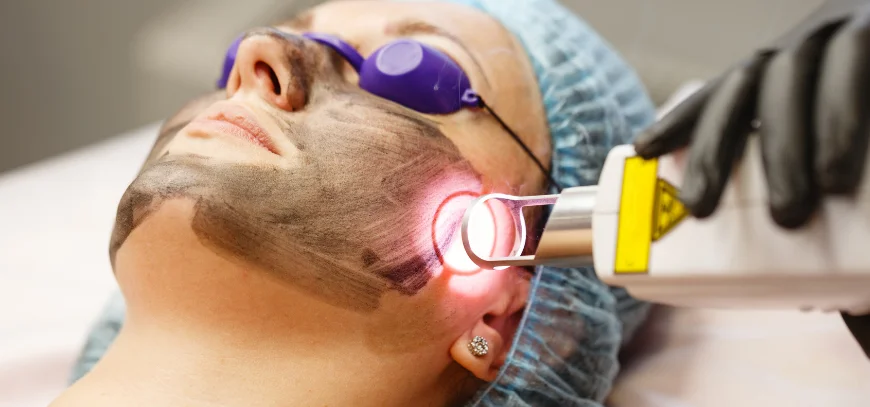
A carbon laser peel, sometimes called a carbon facial in cosmetic settings, applies a carbon preparation and then passes a laser over it. The carbon is the main target. Clinics discuss it for excess oil, congestion, and dullness, not as a replacement for medical care of moderate or severe acne. Any brighter look varies and is often temporary, because oil glands keep working. AB Skin Clinic lists it among laser treatments. This page does not say that your skin should have the procedure.
Concerns this visit may address
The concerns that fit are usually cosmetic.
- Shine and oil that return within hours of washing
- Congestion with blackheads or a rough feel
- Dullness that makeup sits on unevenly
- A wish to look less tired before an event, without a promise about photographs
Inflammatory acne, cysts, and scars need their own assessment. If marks are the main issue, acne scar treatment is a separate topic. The dermatologist decides whether either discussion applies.
Who may benefit from an evaluation
People with oily or combination skin may be candidates for a discussion, not an automatic booking. Tanned, sunburned, infected, or eczematous skin is a poor day for laser. Pregnancy is a reason to postpone elective cosmetic laser. Keloid scars and pigment that darkened after peels should be on the chart. Isotretinoin, a fresh chemical peel, or recent facial waxing changes timing. Bring that history to a visit rather than stacking treatments in one week.
Possible contributing factors
Oil, humidity, and products
Sebaceous glands are set largely by hormones and genetics. Hyderabad’s heat and humidity make oil more obvious, but weather is not the only cause. Heavy makeup, missed cleansing, and pore-clogging sunscreens add surface debris. Over-washing can also irritate skin and provoke more oil.
What is not just “dirty skin”
Blackheads are oxidised keratin and sebum, not dirt from the street. Stress, the menstrual cycle, and some medicines affect breakouts. Dullness may be scale or uneven pigment, and a carbon peel does not specifically treat melasma. Naming the real factor changes what should be done next.
How a dermatologist evaluates the concern
The dermatologist looks at oil distribution, comedones, inflammatory spots, and whether the “dullness” is scale, pigment, or swelling. Scars, redness from rosacea, and melasma are easy to mislabel as texture. A history of cold sores, pigment change, and recent procedures matters before any laser passes near the lip or cheeks.
Treatment approaches that may be discussed
A carbon peel is optional. Everyday dermatology may instead use a simple cleanser and non-comedogenic sunscreen, topical medicines when comedones justify them, or careful extraction. Visible pores are a different goal, outlined under open pores. Pigment care belongs in another plan if colour, not grease, is the issue. The clinic states that it uses USFDA-approved laser equipment. That is the clinic’s description, not a claim that every oily complexion needs this peel.
How the treatment works
Carbon as the laser target
A carbon lotion is applied and allowed to dry. In the way this procedure is generally performed, a Q-switched laser is absorbed strongly by that dark film. The interaction disrupts the carbon at the surface, and some debris lifts away with it. People often feel a snapping sensation while the eyes stay shielded.
What it does not rearrange
The peel does not switch oil glands off, and it is not deliberate deep resurfacing. If the surface looks briefly smoother, that look fades as cells turn over and sebum returns. Cysts, ice-pick scars, and melasma are outside this mechanism. Pore erasure or an acne cure is the wrong expectation.
What happens during a consultation or procedure
If you proceed, makeup is removed and the carbon is painted on the treatment zones, often the central face. Eyes are covered with proper shields. The laser is passed until the carbon is largely cleared, sometimes in more than one pass as the operator judges the endpoint. The room can smell faintly of singed carbon. Treatment of a full face is usually brief compared with surgery, but preparation and explanation take longer than the laser time alone.
Preparation guidance
- Pause strong acids, scrubs, and new fairness creams on the face
- Avoid waxing, threading, or bleaching the face beforehand if you were told to
- Mention cold sores so the lip area can be delayed if needed
- Arrive without makeup or a heavy layer of self-tan
- Say if you are tanned, pregnant, or using a light-sensitising medicine
- Reschedule for a spreading rash or a boil in the field
Include every recent peel or laser, including those done outside a dermatology clinic.
Aftercare and recovery
Wash with a mild cleanser and moisturise if the skin feels tight. Use broad-spectrum sunscreen in the Hyderabad sun, and a hat at midday. Skip steam, sauna, and exfoliating brushes until redness fades. Do not pick flaking. Oil can return within days. That is physiology, not a failed aftercare routine. Blisters, increasing pain, pus, or a new dark patch should be reported. Do not book a scrub for the next morning.
Risks, limitations, and realistic expectations
Expected effects are redness, warmth, dryness, and temporary tightness. Less often, people experience burns, swelling, cold-sore reactivation, broken skin, infection, or pigment that darkens or lightens, particularly on darker skin or tanned skin. Eye injury is possible without correct shields. Allergic irritation from the carbon product is uncommon but possible. Some people see less shine for a short time, and others see little change. The peel does not treat hormonal acne by itself, remove scars, or leave the face permanently matte.
What influences suitability and results
Skin type, how inflamed the acne is, recent tan, and your products all matter. A face of pustules is not the same as oily but calm skin. Technique, eye protection, and full removal of carbon affect safety. Hormones still drive sebum afterwards. If scarring is the real goal, say so, because this peel can distract from that plan. Questions for clinic are in the carbon peel guide. Use them to prepare a conversation, not as a protocol.
Why professional dermatology guidance matters
The procedure is easy to market and easy to misapply. Rosacea, perioral dermatitis, and melasma can look congested or dull and worsen with irritation. A dermatologist can make those distinctions and refuse a cosmetic laser when medicine, or no procedure, fits better. Hygiene, shields, and settings are medical duties. You can contact the clinic to ask how complications are reviewed.
Why consider AB Skin Clinic
AB Skin Clinic was founded by dermatologist Dr. S. Madhuri in Hyderabad. The clinic states she has around ten years in dermatology and has worked as a consultant at Apollo Hospital, Secunderabad, an assistant professor at ASRAM, and a senior resident at Siddhartha Medical College. Her published qualifications include MBBS, MD DVL, DNB DVL, and a Fellowship in Dermatosurgery and Lasers. Email is abskinandneurocentre@gmail.com. The KPHB phone is 94949 46701 and the Manikonda and Alkapuri phone is 98489 99917. Hours are Monday to Saturday, 10:00 am to 1:00 pm and 6:00 pm to 8:30 pm, Sunday closed. If a peel is offered after assessment, it is still cosmetic and results still vary.