
Overview
“Skin lightening laser” is the phrase AB Skin Clinic uses on its laser treatment list. In responsible dermatology the practical meaning is treatment of excess or uneven pigment, such as a blotchy tan, marks after spots, or patches that stand out from the surrounding skin. It does not mean bleaching a person to a new complexion, and it does not mean every face needs laser. Inherited skin colour is not a disease.
Any lightening of excess pigment can relapse. Sun exposure and hormones are the usual reasons patches return or deepen. This page explains that limit up front because the service name is easy to misunderstand. It is education, not a prescription.
Concerns this visit may address
Patients use different words for the same concern.
- A dull, uneven tone after repeated sun exposure
- Brown marks left when acne or a rash has healed
- Blotchy cheeks that may be melasma rather than a simple tan
- Concern that the face and neck no longer match
Who may benefit from an evaluation
An evaluation can help if tone has changed, if marks linger months after acne, or if over-the-counter fairness products have irritated you. People who are pregnant, recently tanned, peeling from a home acid, or being treated for active acne may be asked to wait.
Anyone whose goal is a shade several tones below their family complexion should hear a clear refusal of that goal. Lasers are not a safe route to that outcome. Book a consultation if you want the goal itself examined, not only a device.
Possible contributing factors
Sun and daily light
Ultraviolet exposure darkens melanin and thickens the outer skin, which many people describe as dullness. In Hyderabad, short trips between buildings still add dose across a year. Windows and visible light matter for some pigment disorders. Without a sunscreen habit, procedures chase a moving target.
Inflammation, hormones, and products
Acne, eczema, waxing, and harsh scrubs can leave pigment after the rash fades, especially on skin that tans easily. Hormonal change can drive melasma on the cheeks and upper lip. Steroid creams sold for fairness may thin the skin and cause rebound darkness. These are general patterns a dermatologist asks about. This page cannot assign them to you.
How a dermatologist evaluates the concern
The exam maps colour, symmetry, and texture. A tan line, melasma, freckles, and a single irregular lesion are not one condition. Dermoscopy or a Wood’s lamp may be used. The doctor asks what you have applied, including products from markets or social media, and whether the face burned, peeled, or grew extra hair on a steroid cream.
New, changing, or bleeding spots are assessed before any cosmetic laser is considered. You should be told the name of the problem in ordinary language, and whether laser is a poor match.
Treatment approaches that may be discussed
Laser is one line on a longer list. Depending on the diagnosis, a dermatologist may discuss:
- Sunscreen selection and reapplication as the treatment that prevents relapse
- Topical pigment therapy using agents that are standard in clinic, matched to pregnancy status and irritation risk
- Chemical peels for selected surface pigment
- Stopping a steroid fairness cream and treating the rebound
- Laser only after the diagnosis and the season make sense
- No procedure, if the contrast is mild and the risk is not justified
AB Skin Clinic states that it uses USFDA-approved laser equipment. Read that as the clinic’s statement. It does not certify a result for your face, and it does not replace the assessment.
How the treatment works
Targeting extra melanin
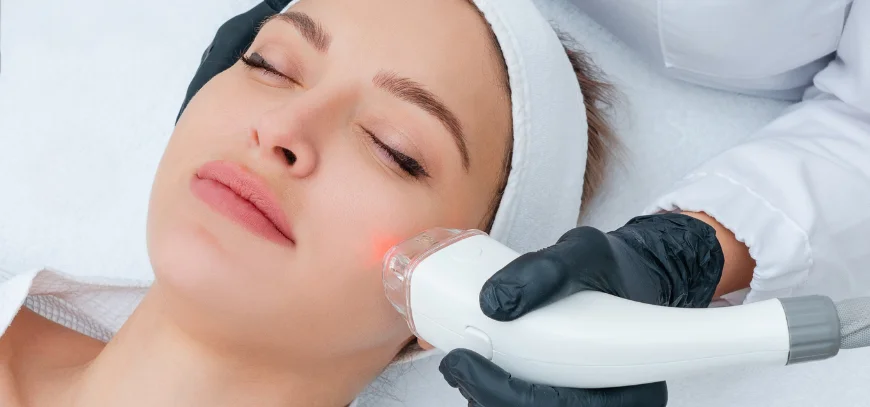
Lasers discussed for excess pigment are absorbed by melanin. Short pulses can break colour into smaller fragments or influence how it is produced, depending on the device and the mark. Cooling protects the surface only when settings match the person. You may feel a snap, and a spot can look briefly darker before it looks lighter.
Why the natural baseline remains
The practical aim is less contrast with your own colour, not a new complexion. Surrounding skin contains melanin too, so treatment that is too strong can leave pale patches. Melanocytes remain and can darken again after sun or a hormonal change. Extra sessions do not cancel that limit.
What happens during a consultation or procedure
The first appointment may end without a laser. If treatment is agreed, the field is cleaned, eyes are shielded, and test spots are sometimes watched before a wider area is treated. Pulses are placed with attention to the hairline, jaw, and any moles that should be avoided.
Afterward you receive instructions for washing, moisturiser, and sunscreen. A review looks for darkening, which can mean inflammation rather than “more pigment to clear.” Further sessions, if any, depend on that review. A fixed package decided before anyone has seen you is a poor fit for pigment work.
Preparation guidance
- Stop scrubbing, bleaching, and new acids unless your dermatologist has asked you to continue a prescribed cream
- Report pregnancy, breastfeeding, and recent isotretinoin or procedures
- Keep the face out of deliberate sun and skip self-tan
- Bring the tubes you use, including mixed jars without labels
- Do not wax or thread the face immediately before a laser day if instructed not to
- Delay treatment if you have a cold sore, infection, or open acne cysts in the field
Aftercare and recovery
Expect possible redness, dryness, and temporary darkening of treated marks. Cleanse gently. Moisturise. Apply a broad-spectrum sunscreen every morning and again if you are outdoors, including on cloudy days and while driving. Avoid sauna, peeling kits, and fragrance-heavy products until the barrier feels normal.
Risks, limitations, and realistic expectations
Risks include burns, swelling, infection, cold-sore flares, prolonged darkening, and light or white patches that can be slow to improve or permanent. Darker skin tones and recent tans carry a higher risk of pigment disruption. Treating unrecognised melasma with heat can worsen it. Eye injury is a risk without shields.
What influences suitability and results
Diagnosis, depth of pigment, skin tone, tan, and hormone status sit at the top of the list. A person who reapplies sunscreen and has stopped steroid creams is in a different position from someone still using them. The season, outdoor work, and an upcoming beach trip can make delay the better decision.
Previous peeling, sensitivity, and a habit of stacking procedures also change risk. Maintenance is part of the result. The melasma and pigmentation guide covers questions patients ask, in general terms. Your own plan still comes from examination.
Why professional dermatology guidance matters
Fairness marketing is crowded with mercury, high-potency steroids, and irritants that damage skin. A dermatologist can identify that damage and can tell a cosmetic wish from a lesion that needs biopsy. Laser settings that are casual on pigment-rich skin cause injuries that are difficult to camouflage.
Professional care also means saying no. If cream and sunscreen are enough, a laser is not a kindness. If you are comparing advice, you can contact the clinic and ask to see the dermatologist who would actually treat you.
Why consider AB Skin Clinic
Dr. S. Madhuri, Chief Dermatologist and Founder, leads AB Skin Clinic. The clinic publishes her qualifications as MBBS from ASRAM Medical College, Eluru, MD DVL from Guntur Medical College, DNB DVL, and a Fellowship in Dermatosurgery and Lasers, and states that she has around ten years in dermatology. The KPHB rooms are on the first floor, Triveni Towers, MIG-154, Road No. 1, Kukatpally Housing Board Colony, Hyderabad, Telangana 500072, phone 94949 46701. Published hours are Monday to Saturday, 10:00 am to 1:00 pm and 6:00 pm to 8:30 pm, and Sunday is closed.