
Overview
Laser toning is a clinic name for repeated low-fluence laser passes, often with a Q-switched Nd:YAG device in general dermatology practice, aimed at uneven pigment rather than one dark spot. Energy stays relatively low so the epidermis is not deliberately wounded as in resurfacing. People ask about patchy cheeks, dullness, or colour makeup does not hide. AB Skin Clinic lists laser toning in Hyderabad. Listing means it can be discussed, not that every uneven complexion should be lasered or that pigment is cured. This page is not a personal plan.
Concerns this visit may address
The same complaint can hide different diagnoses.
- Brown patches on the cheeks, forehead, or upper lip that may be melasma
- A muddy colour after years of sun
- Marks after acne, better framed as post-inflammatory pigment
- Unevenness that remains when sunscreen use has been patchy
Epidermal tan, dermal pigment, and mixed melasma do not respond alike. Skin treatments for texture or scars are a different conversation from toning.
Who may benefit from an evaluation
An evaluation is reasonable if pigment has lasted months, spreads in sun, or has not shifted with a basic routine. Pregnancy, breastfeeding, a fresh tan, active eczema, and prior darkening after procedures are reasons to wait or avoid laser. Wanting a lighter inherited complexion is a different request from treating a defined pigment problem. Laser toning does not change natural skin colour. Raise that distinction at an appointment before any course.
Possible contributing factors
Sun, heat, and visible light
Ultraviolet light is the main driver of relapse. In Hyderabad, commuting, driving, and outdoor work add dose even without sunbathing. Visible light and heat matter for some people with melasma. Skipping sunscreen on cloudy days still counts.
Hormones, products, and inflammation
Pregnancy, contraceptives, and other hormonal shifts are classic melasma triggers. Scented cosmetics, scrubs, and irritant peels can deepen pigment. Some medicines and a family tendency belong in the history. These are patterns a dermatologist asks about, not a diagnosis from this article.
How a dermatologist evaluates the concern
The exam notes where colour sits and whether the pattern is blotchy melasma or a sharper spot. Wood’s lamp or dermoscopy may hint at depth. The doctor asks about pregnancy, contraception, steroid creams, and previous lasers or peels. Photographs in consistent light help because melasma fluctuates with seasons. A new, irregular, or bleeding mark is identified before any pigment laser. Treatment is not started on a spot that has no name.
Treatment approaches that may be discussed
Toning is rarely the whole plan. A dermatologist may discuss daily sunscreen with reapplication, topical pigment care matched to pregnancy status, chemical peels when the surface allows, or a different approach on the pigmentation reduction page. Procedures may be paused in a flare, pregnancy, or a deep tan. The clinic states that its laser equipment is USFDA-approved. That is the clinic’s statement. It does not prove toning will suit your melasma.
How the treatment works
Low-fluence passes
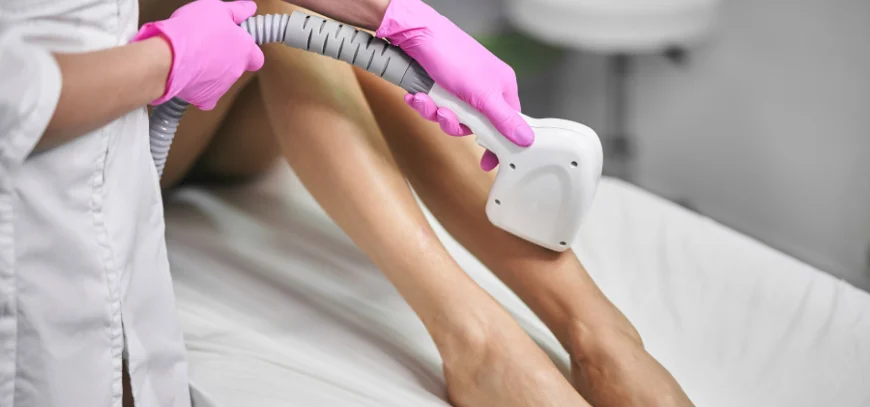
Short pulses at modest energy are passed over the field. Pigment absorbs the light, while low fluence and cooling are meant to limit open wounds. You may feel warmth or a mild snap, and the face can look pink for hours. How many sessions, if any, is a clinical judgement this page cannot assign.
Why rebound is part of the story
Melasma is an active process, not a quiet stain. Heat and inflammation can darken patches, so aggressive settings are a known pitfall. A careful course can still be followed by relapse when sun, hormones, or irritating products continue. Contrast may soften, or it may not. Setting that expectation is part of care.
What happens during a consultation or procedure
The first visit is mostly examination. If a session goes ahead, makeup and sunscreen are removed, eyes are protected, and pulses are laid in passes. A test area is sometimes watched before a full face, especially after a previous bad reaction. You should leave knowing what to apply that night and which colour changes need review. A face that looks even in week two can shift by the next sunny month.
Preparation guidance
- Report hydroquinone, retinoids, steroids, and any fairness cream
- Pause acids, scrubs, and waxing on the face if instructed
- Avoid sunburn and tanning for the period you are given
- Mention pregnancy, breastfeeding, and plans to conceive
- Bring your sunscreen so the texture can be checked
- Do not book a first laser day on the day of a facial, bleach, or threading
If the skin is peeling or infected, the appointment is for assessment, not for pushing through treatment.
Aftercare and recovery
Redness often settles enough for indoor work, but that is not universal. Use a bland moisturiser and the sunscreen you were advised, and reapply outside. Skip saunas and strong actives until the barrier is calm. Do not add another clinic’s peel between visits without telling both doctors. Grey-brown patches, intense itch, or broken skin should stop home experiments. Sunscreen continues after the series, because relapse is part of melasma biology.
Risks, limitations, and realistic expectations
Redness, dryness, and temporary darkening can occur. Burns, blistering, prolonged pigment change, and a rebound that leaves melasma darker are the more serious problems. Richer skin tones, a recent tan, and a history of procedure-related pigment carry more of that risk. Eye protection is mandatory. Toning does not remove scars, replace sunscreen, or hold a result against pregnancy or sun. Some patches lighten partly. Some do not. A permanent even tone is not an honest promise for a condition that fluctuates.
What influences suitability and results
Depth of pigment, duration, hormones, and daily sun dominate outcomes. Previous worsening after a peel or laser is a warning. Starting an aggressive course just before long outdoor travel is often unwise. The laser toning guide lists questions to ask. It does not replace an exam by the treating dermatologist.
Why professional dermatology guidance matters
Salon facials and medical laser toning share a word, not a safety profile. A dermatologist can decline treatment, treat dermatitis first, or choose a cream when laser risk is high. Brown spots that might be skin cancer must not be lasered casually. Heat used too often can inflame melasma. Ask who will see you if colour darkens after a session.
Why consider AB Skin Clinic
Dr. S. Madhuri, Chief Dermatologist and founder, has published qualifications of MBBS (ASRAM Medical College, Eluru), MD DVL (Guntur Medical College), DNB DVL, and a Fellowship in Dermatosurgery and Lasers. The clinic states she worked as a consultant at Apollo Hospital, Secunderabad, an assistant professor at ASRAM, and a senior resident at Siddhartha Medical College, with around ten years in dermatology. The Manikonda and Alkapuri rooms are on the Second Floor, Sy No 140, BLOCK-A, Plot No 14, above HDFC Bank ATM, near Neknampur, Gandipet, Telangana 500089, phone 98489 99917. Email is abskinandneurocentre@gmail.com. Hours are Monday to Saturday, 10:00 am to 1:00 pm and 6:00 pm to 8:30 pm, Sunday closed. The address does not replace the consultation.