
Overview
Warts are benign growths caused by human papillomavirus in the upper skin. Wart removal at AB Skin Clinic confirms the diagnosis and the type before treatment. The clinic has shared images of laser wart care; laser is still not the method for every wart. Dr. S. Madhuri plans around type, site, skin tone, and what you have already tried. Common, flat, plantar, and filiform warts are not interchangeable.
Concerns this visit may address
People come for a rough finger bump that snags, a painful sole lesion they have called a corn, or many small flat bumps on the face or beard area after shaving. Filiform warts, slender projections on the neck, eyelids, or around the mouth, are another reason to book. Return after a pharmacy liquid or a salon attempt, spreading warts, and marks you cannot distinguish from moles all belong in clinic. Genital warts follow a different pathway. Say so when you book, and do not use a hand-wart product on genital skin.
Who may benefit from an evaluation
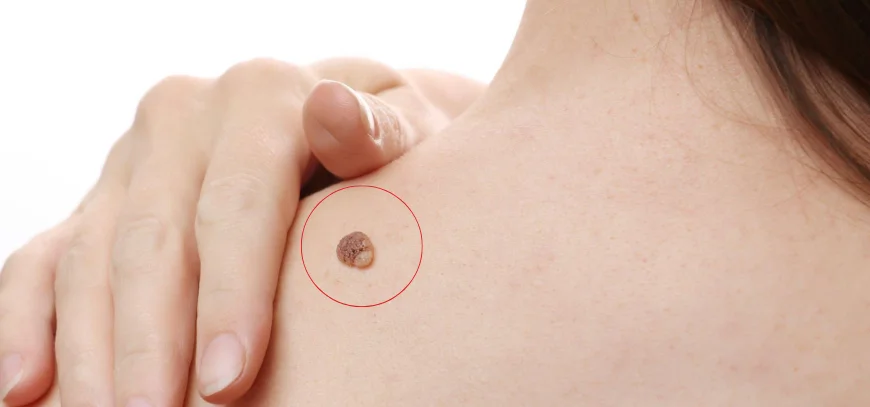
An evaluation helps when a wart persists, a plantar wart hurts, or facial warts make scarring a real concern. People with diabetes, poor circulation, or reduced immunity should be assessed before destructive treatment on the feet or hands. The visit also clarifies what to avoid: cutting, unlabelled acids, and household burning spread infection and scar the skin. A pigmented mole beside a wart is examined on its own merits using mole removal principles, not treated as if it were viral.
Possible contributing factors
Human papillomavirus is the cause. Different strains favour different sites, which is why a rough hand wart and a flat facial wart do not look alike. Nail biting, cuticle picking, barefoot time around pools, and shaving over a wart can seed new lesions. Moist, occluded skin supports plantar warts. Eczema and wet work can worsen the pattern.
How a dermatologist evaluates the concern
The dermatologist looks for interrupted skin lines and the small dark capillary points that often mark a wart, and separates corns, calluses, molluscum, skin tags, and moles. Dermoscopy is used when the surface is unclear. A lesion that is not a typical wart may need a biopsy rather than destruction. The wart removal guide is background. Laser is mentioned only when that type and site support it.
Treatment approaches that may be discussed
A dermatologist may discuss topical keratolytics that soften thick keratin, cryotherapy, electrosurgery with or without curettage, and laser for selected warts. One method is not applied to every wart. A thick plantar wart may need paring plus a keratolytic or a destructive sitting. A filiform wart near the eye needs a delicate approach. Flat facial warts mark easily, so the gentlest effective option is preferred. Laser treatments are used only when that wart and site support them.
How the treatment works
Keratolytics loosen the thick surface so other care can reach deeper; they do not clear virus in one application. Cryotherapy freezes wart tissue, sometimes raising a blister that peels over more than one cycle. Electrosurgery destroys wart tissue under local anaesthesia and is often paired with scraping. Laser targets selected wart tissue with light and is one tool among others. A treated wart can heal while a neighbour appears.
What happens during a consultation or procedure
The first visit identifies the type and discusses options, healing, and recurrence. If you proceed the same day, the skin is cleaned and, for destructive methods, numbed. A dressing is used if the surface is open. Facial warts may be treated more conservatively, with review before a further step. Plantar warts often need padding advice. While a blister is present, do not share pumice or pick the roof.
Preparation guidance
List medicines, allergies, diabetes, immune conditions, and chemotherapy. Say if you are pregnant or breastfeeding, because some options are deferred. Do not pare the wart until it bleeds the night before. Bring any acid you have been using instead of applying a fresh layer that morning. Hours at both Hyderabad sites are Monday to Saturday, 10:00 am–1:00 pm and 6:00 pm–8:30 pm; Sunday is closed.
Aftercare and recovery
Keep the area clean and covered if a dressing was applied. Leave blisters intact unless you were told otherwise. Apply a prescribed keratolytic only to the wart, protect nearby skin, and stop if soreness is excessive. Pigment change is common after freezing or destruction, especially on the face and in darker skin, and a pink or brown macule can outlast the wart. Call for spreading redness, pus, fever, or unexpected pain on walking.
Risks, limitations, and realistic expectations
Recurrence is possible with every method. New warts can form if virus remains nearby or if shaving and picking continue. Pain, blistering, infection, scarring, and pigment change vary by site. Aggressive treatment beside the nail can disturb the nail. Untrained cutting on the sole risks deeper injury. No method clears every wart in one sitting, and observation is sometimes better than a scar. A realistic hope is fewer, flatter, or less painful warts after a planned course.
What influences suitability and results
Wart type, thickness, number, and location influence the method. Skin tone and a history of dark scars influence how aggressive a sitting should be. Diabetes and circulation change the threshold for procedures on the feet. Skin that has already been burned by home acids is harder to assess and slower to heal. Shaving over flat warts can seed new lesions. Immune status sets a limit that technique cannot always overcome.
Why professional dermatology guidance matters
Warts mimic corns, moles, and other growths. Treating the wrong lesion with cold, electricity, or laser harms the skin without solving the problem. A dermatologist also judges when a sample is wiser than another round of destruction, and keeps prescribed acids on the wart rather than on healthy facial skin. Genital symptoms stay on the correct clinical path. Medical care means a diagnosis, a method matched to type, and follow-up for recurrence.
Why consider AB Skin Clinic
AB Skin Clinic was founded by Dr. S. Madhuri, MBBS, MD DVL, DNB DVL, Fellowship in Dermatosurgery and Lasers. The clinic notes about ten years in dermatology. She is listed as a consultant at Apollo Hospital, Secunderabad, a former assistant professor at ASRAM, and a former senior resident at Siddhartha Medical College. The clinic states that USFDA-approved lasers are used. KPHB: Triveni Towers, MIG-154, 1st floor, Road No. 1, KPHB Colony, Hyderabad 500072, 94949 46701. Manikonda: Second Floor, Sy No 140, BLOCK-A, Plot No 14, above HDFC Bank ATM, Alkapuri, near Neknampur, Gandipet, Telangana 500089, 98489 99917. Hours are Monday to Saturday, 10:00 am–1:00 pm and 6:00 pm–8:30 pm; Sunday is closed. See skin treatments or book an appointment.