Journal
Wart Removal in Hyderabad: Types, Treatment Options & Aftercare
Warts are a viral skin infection, not a mole and not poor hygiene. Learn the common types, clinic treatments, and aftercare used in Hyderabad practice.
 Dr. S. Madhuri4 min read
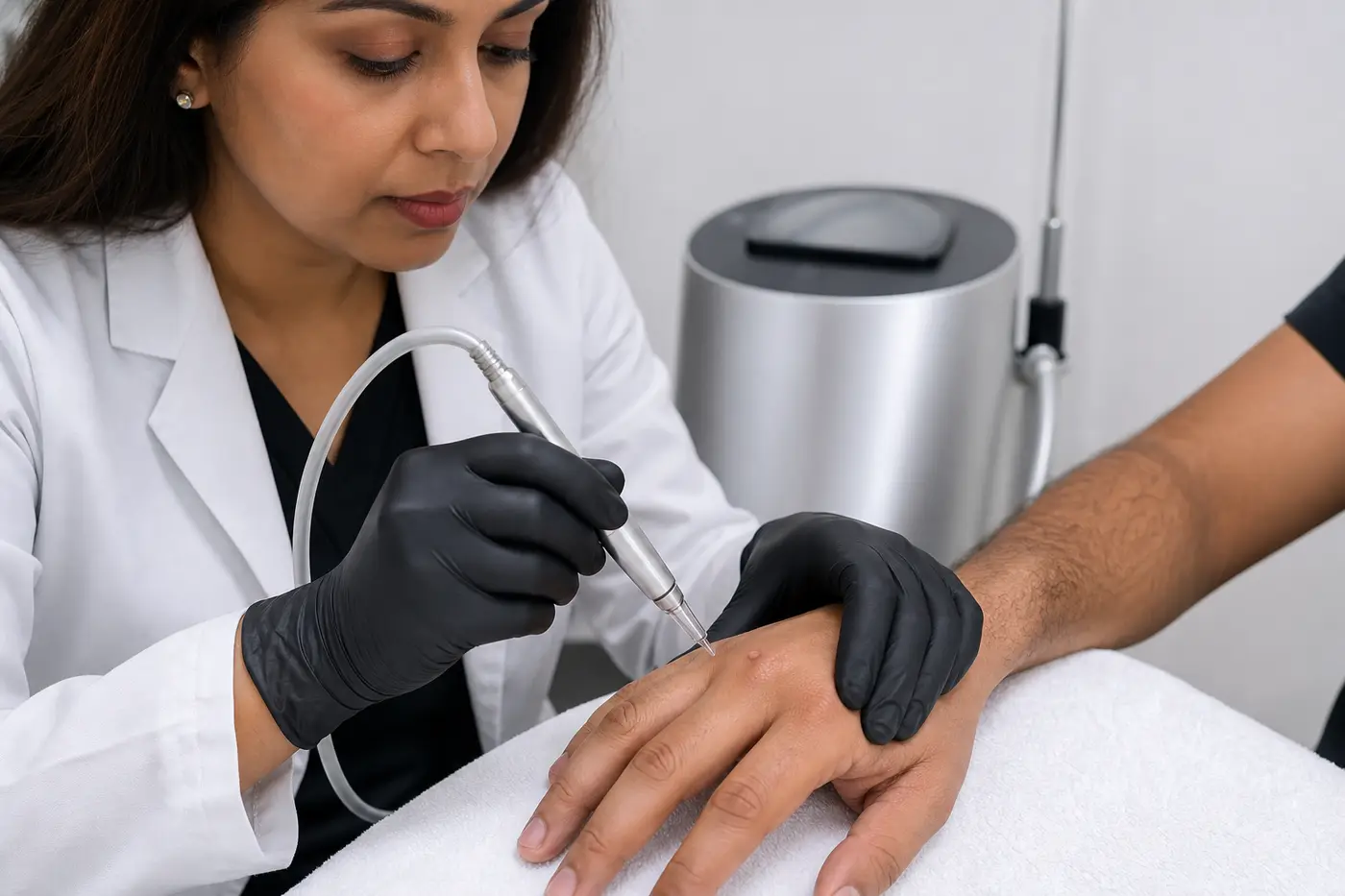
Warts are small growths caused by human papillomavirus infecting the top layers of skin. They are common on hands, feet, the face, and sometimes the beard area. They are not dirt, and they are not moles. Many disappear eventually without treatment, but that can take a long time, and some spread while you wait. Clinic treatment aims to destroy the infected tissue in a controlled way and to limit scarring.
This is general information about wart removal. The right method depends on the type of wart, the site, your age, and whether you have diabetes or a condition that affects immunity.
Types you might recognise
Common warts are rough, skin-coloured bumps, often on the fingers or back of the hands. Tiny black dots inside them are clotted capillaries, not seeds, despite the old name “seed wart.” Plantar warts sit on the sole. Pressure pushes them inward, so they can feel like a stone in the shoe. They are easy to confuse with a corn. Flat warts are smoother and smaller, sometimes in clusters on the face or shaved legs, where a razor can spread them. Filiform warts are thread-like and favour the eyelids, lips, and neck.
Genital warts are a related viral problem with different care, privacy, and follow-up. They should be examined by a doctor. Do not use a salicylic acid plaster meant for a foot wart on genital skin, the face, or a child’s skin.
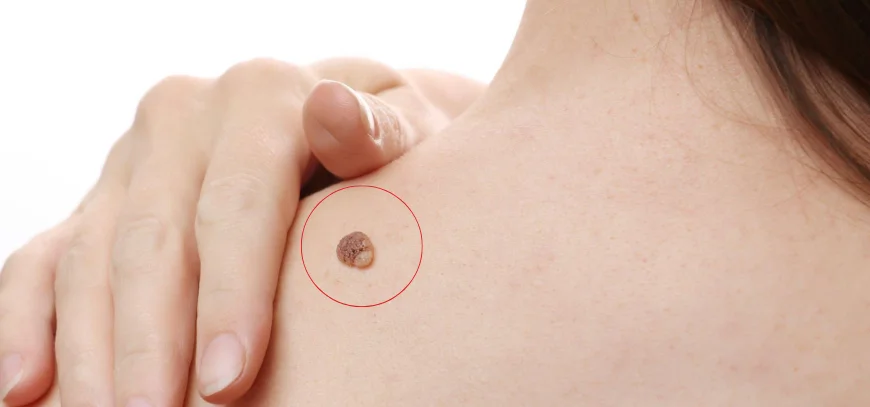
A growth that bleeds, darkens, or has been present unchanged for years may not be a wart at all. Moles and other lesions are assessed differently. If you are unsure, start with an examination rather than a pharmacy freeze spray. The mole removal guide explains why changing spots need a doctor, not a home chart.
Treatment options a dermatologist may use
No single method clears every wart. Plans often combine a clinic procedure with a home medicine, and they often need repeat visits. Options that may be discussed include:
- Prescription liquids or plasters that peel the thick surface gradually
- Cryotherapy, which freezes the wart in the clinic
- Electrosurgery or radiofrequency for selected lesions, with local anaesthesia
- Laser in some stubborn cases
- Medicines that stimulate a local immune response, when appropriate
Over-the-counter freeze kits are weaker than clinic freezing and are a blunt tool on the face. Salicylic acid can help common warts on thick skin if used exactly as directed, kept off healthy skin, and avoided in people with poor circulation or diabetes on the feet unless a doctor agrees. Filing a wart with a shared pumice stone spreads virus around the family bathroom. If you are told to thin the surface, use a disposable file and keep it for that spot only.
Children need shorter, kinder plans. Painful freezing of many warts in one sitting is not always the best first step. Pregnancy changes which medicines are acceptable. Tell the clinic before you are prescribed a take-home paint.
Aftercare and preventing spread
The treated area may blister, darken, or form a scab. That is expected with several methods. Leave the roof of a blister intact if you were told it is a protective layer. Wash with gentle soap, apply only the ointment you were given, and skip swimming until the surface is closed if that was the instruction. Picking is how scars and new warts start in nearby scratches.
Warts like small breaks in the skin. Simple precautions reduce spread while treatment works:
- Do not share towels, razors, or nail clippers
- Cover a hand wart with a plaster in the gym if it is rubbing shared equipment
- Wear footwear in public showers
- Avoid shaving directly over flat warts on the beard or legs
- Keep nails short so you do not pick virus under the nail fold
- Finish the course even when the bump looks smaller
Recurrence is possible. The virus can remain in nearby skin that still looks normal. A wart that returns is a reason to review the method, not proof that treatment “failed forever.” A spot that does not look like the original wart after healing should be seen again so something else is not missed.
Hyderabad humidity can soften dressings. If a plaster will not stay on during a sweaty commute, ask for an aftercare option that survives the climate. Increasing pain, spreading redness, or pus is not normal peeling. Contact the clinic.
Who treats them here
Dr. S. Madhuri sees patients at AB Skin Clinic in KPHB and Manikonda. Her qualifications are MBBS, MD DVL, DNB DVL, and a Fellowship in Dermatosurgery and Lasers. Wart care is everyday dermatology: diagnose the growth, choose a method that fits the site, and follow it until the skin has settled.
Book an appointment rather than layering acids before a function or a school exam week, because some treatments leave a visible scab. Her profile is on the doctor page. If you use blood thinners or have a pacemaker, mention that when any electrical method might be discussed.
This article is general education from AB Skin Clinic. It is not a diagnosis or a treatment plan. Suitability is decided in a consultation.
 Related treatmentWart Removal in HyderabadView treatment