Journal
Why Hair Fall Increases in October in Hyderabad, and When to See a Doctor
Hair shedding often rises in Hyderabad after the monsoon. Learn how seasonal fall differs from pattern thinning, and when treatment is even discussed.
 Dr. S. Madhuri4 min read
October hair fall is common in Hyderabad, and it is not always a procedure problem.
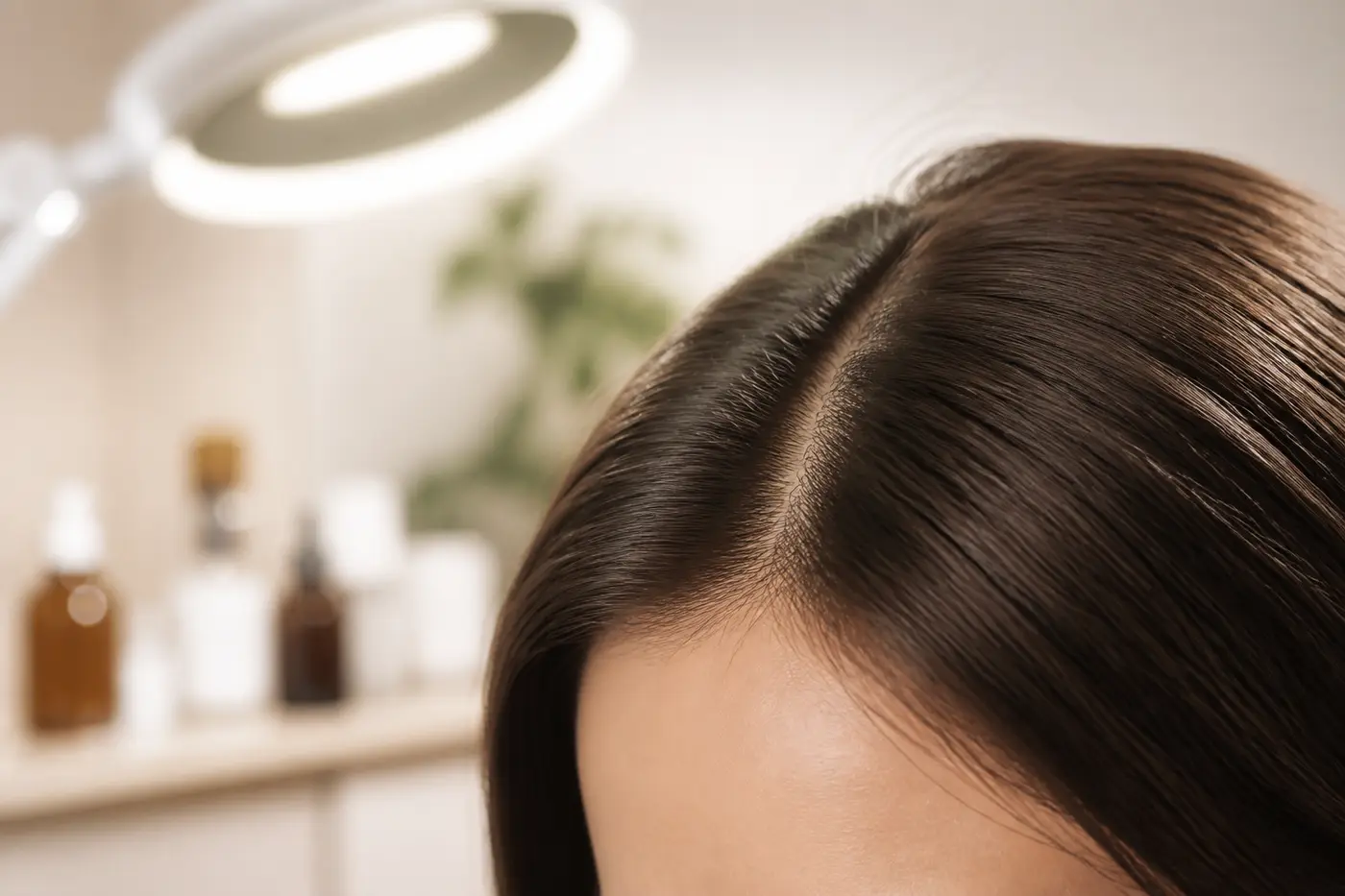
Many people notice more strands on the pillow and in the shower in the weeks after the monsoon. A seasonal shed can look alarming and still recover. Pattern thinning does not follow the same calendar, and the two should not be treated as the same problem.
This guide explains the difference. It is not a diagnosis. Suitability of any treatment is decided after a scalp examination at AB Skin Clinic.
Why does shedding rise after the monsoon?
A large share of post-monsoon shedding is telogen effluvium. Hairs that were pushed into a resting phase by fever, a crash diet, illness, childbirth, or a hard few months all release together. The trigger is often two or three months earlier, so October can reflect a late-monsoon illness or a stressful July, not something you did this week.
Humidity, sweat on the scalp, and dandruff make the shed look heavier because strands clump. Flakes and itch are a scalp problem of their own. Treating them can reduce breakage even when the shed is seasonal. The dandruff and scalp care note covers that pattern.
Seasonal shedding is usually diffuse. You see hair everywhere, while the partition and hairline shape stay roughly the same. It often slows over a few months once the trigger has passed. New hair comes through as short fringe along the hairline. That regrowth is a good sign, not a new disease.
How is pattern thinning different?
Androgenetic alopecia is a change in pattern, not only a change in the drain. Women often notice a wider partition. Men often notice a receding hairline or a thinner crown, usually with a family pattern. It does not start and stop with the rains. A seasonal shed can sit on top of pattern thinning, which is why a bad October does not prove that every strand will return.
A dermatologist looks at the scalp, not only the ball of hair you bring in a cover. They may ask about thyroid disease, iron deficiency, recent fever, new medicines, and childbirth. Blood tests are used when the history suggests them, not as a default package for every person who sees extra hair in October.
When are PRP or GFC even discussed?
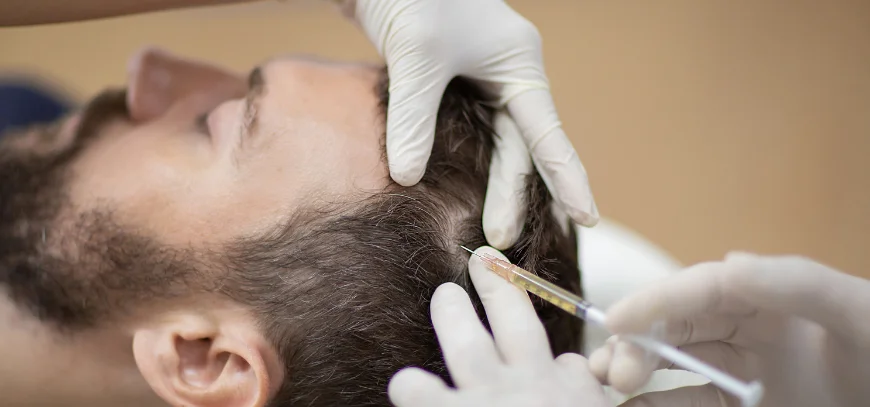
PRP and GFC are blood-based treatments some dermatologists consider for selected thinning after the diagnosis is clear. They are not the first step for a straightforward seasonal shed that is already slowing. Injecting a stable, temporary shed can be unnecessary. They also do not restore areas that are fully bald or scarred.
The PRP and GFC comparison explains how the two preparations differ. Neither replaces finding the cause. Dr. S. Madhuri, dermatologist and founder of AB Skin Clinic, sees patients at KPHB and Manikonda. Her qualifications include MBBS, MD DVL, DNB DVL, and a Fellowship in Dermatosurgery and Lasers. She recommends a procedure only after examination.
While you wait for that visit, skip tight styles that snap hair, harsh weekly oil heats if the scalp is already itchy, and supplements borrowed from a friend. A simple wash routine and patience are enough for many seasonal sheds.
Common questions
Is October hair fall normal in Hyderabad?
Extra shedding in October is common after the monsoon, especially if you were ill, dieting, or under heavy stress a few months earlier. It still deserves a look if the partition is widening or the shed is not slowing.
How long does seasonal shedding last?
Many people see the heaviest fall for several weeks, then a slow settle over a few months. Short new hairs along the hairline are a usual part of recovery. A shed that continues past that, or comes with bald patches, needs a doctor.
Should I start PRP as soon as I see hair in the shower?
No. PRP and GFC are considered after the type of hair loss is identified. A short seasonal shed often does not need them. Pattern thinning is a different conversation, made in clinic.
You can book an appointment if the shed is patchy, the scalp is painful, or thinning has been progressing for years. Bring a list of recent illnesses and medicines. That history is more useful than another oil chosen in a hurry.
This article is general education from AB Skin Clinic. It is not a diagnosis or a treatment plan. Suitability is decided in a consultation.
 Related treatmentPRP for Hair in HyderabadView treatment