
Overview
A stretch mark, or stria, is a linear scar that forms when the skin is stretched faster than its support can adapt. New marks are often pink, red, or purple. Older marks become pale, shiny, and slightly depressed. AB Skin Clinic lists stretch mark treatment among its skin services. The clinic’s own description of this care has mentioned laser therapy, microneedling, and topical treatments. Those are options a dermatologist may discuss. They are not a promise that unmarked skin will return.
This page explains how marks are assessed at the Hyderabad clinics in KPHB and Manikonda, what can realistically change, and when a medical check matters more than a cosmetic device. It does not diagnose the cause of your marks. Dr. S. Madhuri makes that judgment in person. If you want a shorter explanation first, the stretch marks article covers creams versus clinic care.
Concerns this visit may address
People come with marks on the abdomen, hips, breasts, thighs, or upper arms. Some are new after pregnancy or a growth spurt. Others have been pale for years and still bother the person in daylight or swimwear. A few appear quickly and widely, which raises a different set of questions than a slow cosmetic change. The visit can also separate stretch marks from other linear scars, including acne scars on the trunk, which are planned differently. The acne scar treatment page describes facial scar patterns that should not be confused with striae.
Colour is worth describing. You do not need to be distressed by every mark to ask what, if anything, is worth doing.
Who may benefit from an evaluation
An evaluation helps if marks are new and you want to know whether a topical has any role while they are still red. It helps if you have already used several creams and want an honest view of procedures. It is important if marks appeared suddenly with weakness, easy bruising, or other symptoms that might need medical rather than cosmetic attention. Pregnancy and breastfeeding change which procedures can even be discussed, so say so at the start.
Possible contributing factors
Rapid growth in adolescence, pregnancy, and significant weight change are common stories. Some medicines, including corticosteroids, are associated with marks. Family pattern and skin quality play a role. Hormonal conditions can be relevant when marks are extensive and appear with other signs. Not every person with a few hip marks needs a hormone work-up. The doctor decides whether history alone is enough.
How a dermatologist evaluates the concern
The marks are examined for colour, width, and whether they are raised, flat, or slightly sunken. New red marks and old pale marks on the same person are charted separately because they are not treated as one problem. The surrounding skin is checked for steroid side effects or other rashes. Your history covers timing, pregnancies, weight change, medicines, and any tendency to thick scars.
If the pattern is unusual, the visit may pause cosmetic talk and focus on health. Photographs can record a baseline.
Treatment approaches that may be discussed
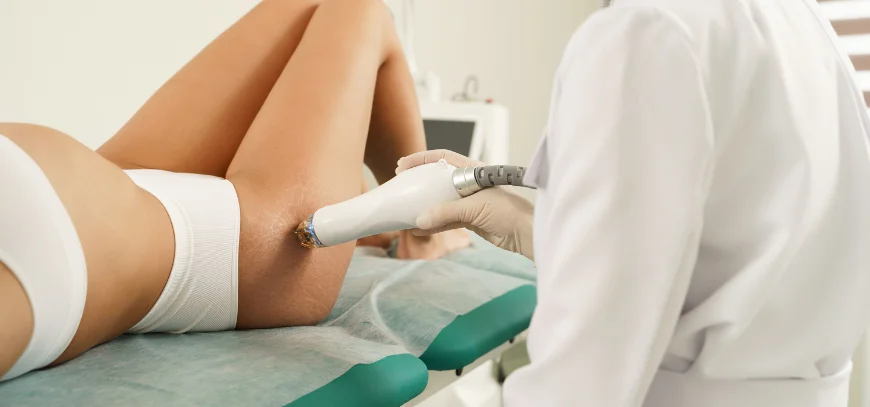
For early red marks, a dermatologist may discuss a prescription topical for a defined period, plus sun protection on exposed skin. Oils are for comfort, not a cure. Microneedling uses fine needles to create controlled micro-injuries and may be offered as a series. It does not fill a mark the way a filler fills a facial fold. Laser energy may be discussed for colour or texture. The clinic states that it uses USFDA-approved laser equipment. Settings are not published here. Laser is a poor idea on infected or freshly tanned skin.
How the treatment works
Early marks still have more visible blood flow, so colour can settle as that activity fades, with or without treatment. Procedures aim to nudge collagen remodelling in a scar that has already lost some of its elastic pattern. They do not zip the skin back to its pre-stretch state. Each session, if advised, is a small input. The skin then needs weeks to show whether texture has changed. Stacking aggressive treatments too close together raises the chance of irritation and pigment shift, which is particularly relevant in sunny Hyderabad.
What happens during a consultation or procedure
The first visit is usually a discussion and examination. If a procedure is agreed, the skin is cleaned and, when appropriate, numbed. Microneedling or laser is then performed on the marked area only. You should know how the area will look that evening and when to return. Abdomen and breast skin after pregnancy may still be changing, so the doctor may suggest waiting. You can request a time once you are ready for that conversation. Published hours are Monday to Saturday, 10:00 am to 1:00 pm and 6:00 pm to 8:30 pm. Sunday is closed.
Preparation guidance
Do not schedule a first procedure in the same week as an event where the area will be visible. Stop harsh scrubs on the area. Mention isotretinoin, recent sunburn, and any history of keloids. If you are pregnant, say so before you travel for a device treatment. Bring the names of creams already used so the plan does not repeat something that has already failed or irritates you.
Aftercare and recovery
Redness and a tight, grazed feeling are common for a few days after needling or laser. Follow the cleansing and moisturiser advice you are given. Avoid swimming, tight friction, and home acids until the clinic says the skin has closed. Sun on healing skin can darken it. Use covering clothing on the area when you are outdoors. Contact the clinic for spreading redness, pus, or pain that increases after the first day.
Risks, limitations, and realistic expectations
Marks can look worse before they look calmer, because redness and swelling highlight them. Pigment change, both darker and lighter, is possible after procedures. Infection is uncommon if aftercare is followed and still part of consent. Scarring beyond the original mark is rare and not impossible if the skin is picked or if someone has a strong scar tendency.
The honest result is often softer colour or a mark that catches less shadow. Complete disappearance is the wrong benchmark. Old pale marks change less than early red ones.
What influences suitability and results
Age of the mark, body site, skin tone, hormones, and how the skin scars all matter. Breast and abdomen skin that is still lax after pregnancy may need a different expectation from a narrow mark on the arm. Active infection, pregnancy, and some medicines delay procedures. People who tan deeply between sessions make pigment complications more likely. The skin treatments overview shows neighbouring options, but stretch marks are not treated with the same plan as facial pigment.
Why professional dermatology guidance matters
Stretch marks are usually harmless, yet the pattern sometimes points to medicine use or a hormonal issue. A dermatologist can tell those situations apart from ordinary marks after growth or pregnancy. Devices used too early, too often, or on the wrong colour of mark waste time and can stain the skin. Guidance also includes permission to do nothing when the likely gain is small.
Why consider AB Skin Clinic
The clinic publishes stretch-mark care as a skin service using laser, microneedling, or topical treatment when suitable. Dr. S. Madhuri, founder and chief dermatologist, holds MBBS from ASRAM Eluru, MD DVL from Guntur Medical College, DNB DVL, and a fellowship in dermatosurgery and lasers, with around ten years in dermatology. KPHB is on the first floor of Triveni Towers, MIG-154, Road No. 1, KPHB Colony, Hyderabad 500072, phone 94949 46701. Manikonda/Alkapuri is on the second floor, Sy No 140, BLOCK-A, Plot No 14, above the HDFC Bank ATM, Alkapuri, near Neknampur, Gandipet 500089, phone 98489 99917. Contact the clinic to confirm which room you are visiting.